Lightweight, Compact and Powerful: Fully Pneumatic Drilling Feed Units from Sehrbrock Montagetechnik
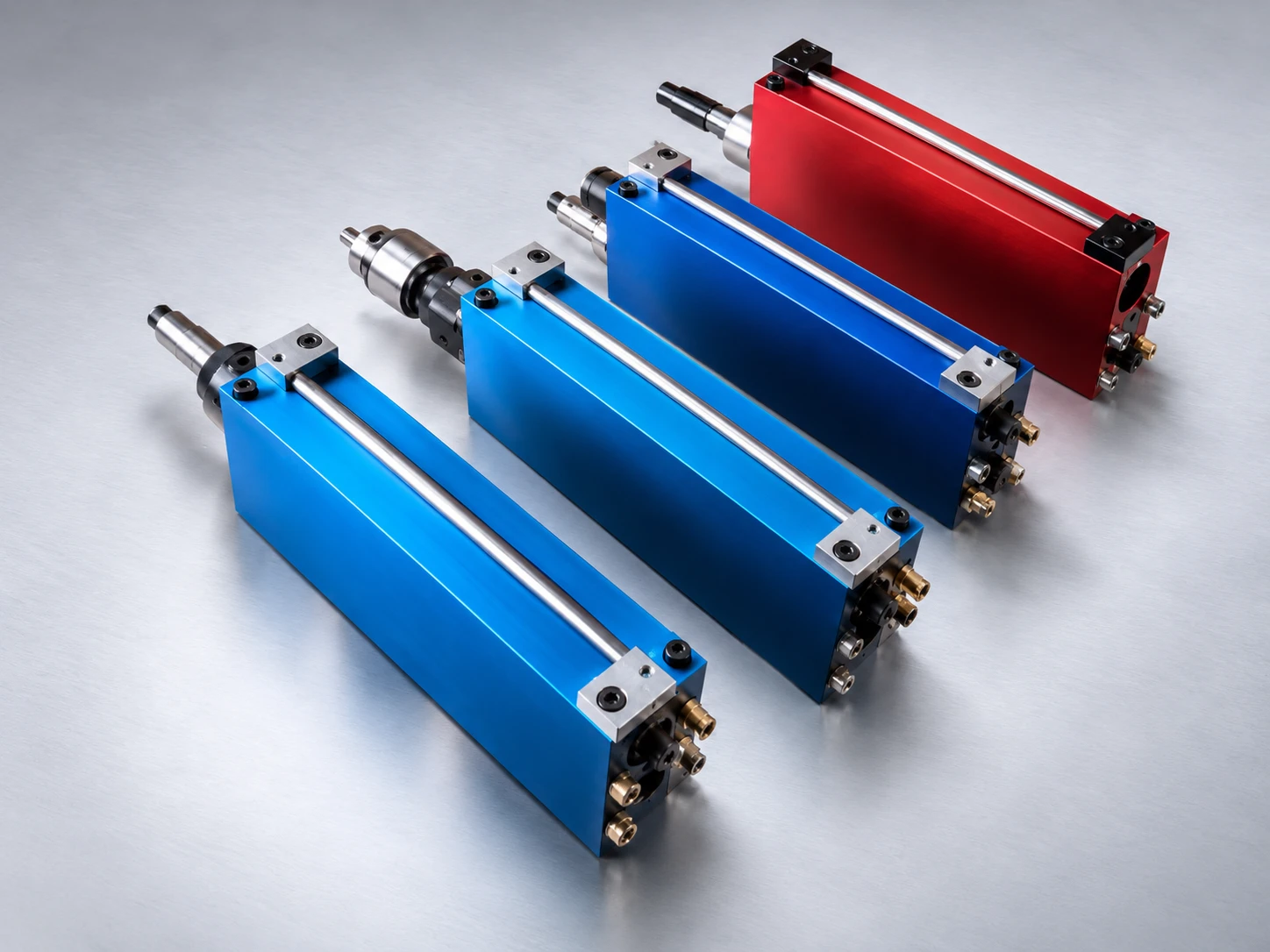
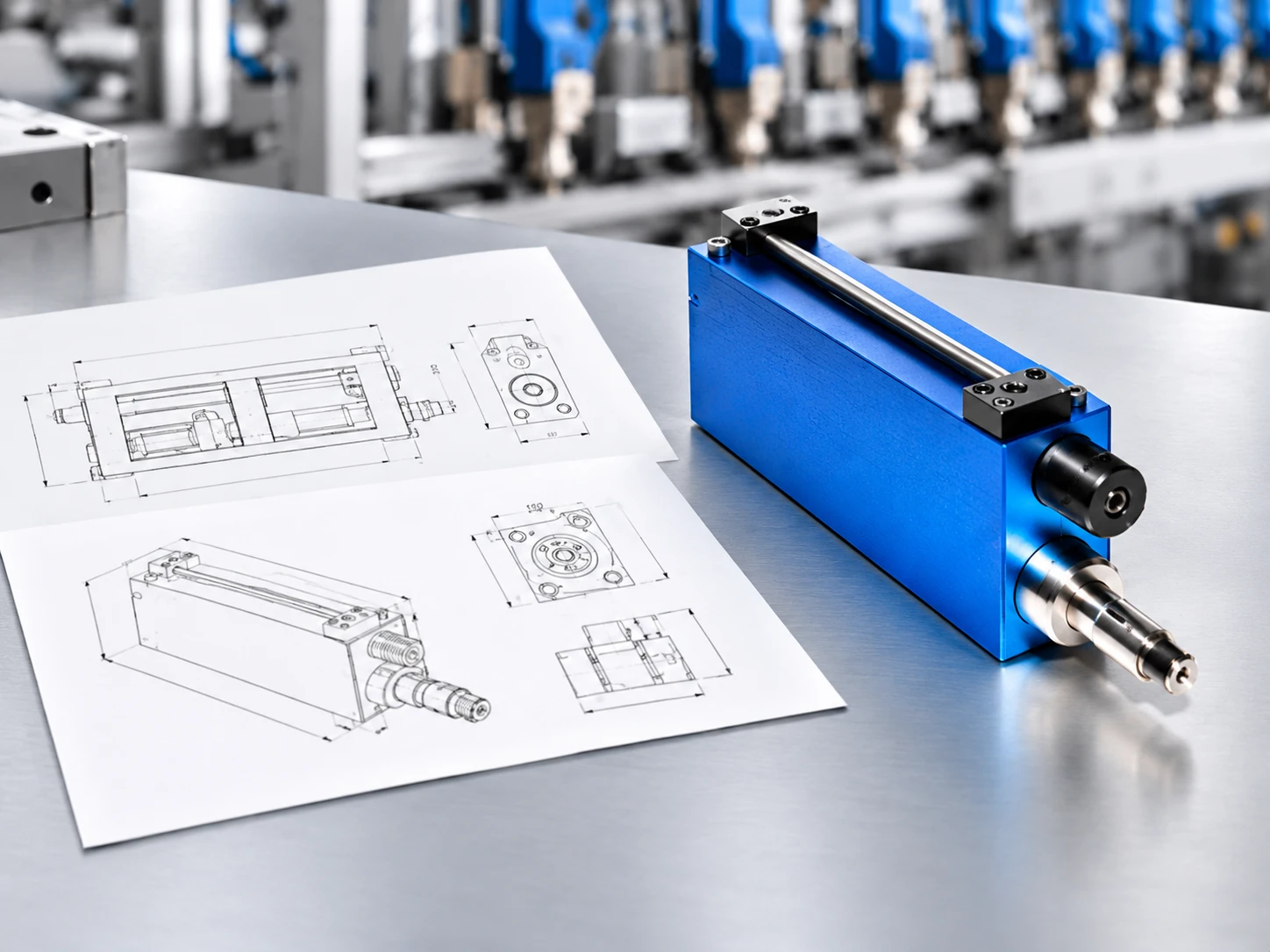
Sehrbrock Montagetechnik offers compact, lightweight and purely pneumatic drilling units and drill feed units for repetitive drilling and machining operations. These robust, quiet and field-proven units, with thousands in use, are among the smallest machines on the market. With dimensions of just 40 × 80 mm and a length of 185 mm, they can drill holes up to 6 mm in steel.
The product range comprises three series: drilling units for hole diameters from 1 to 6 mm in steel, with 300 W of power and speeds ranging from 600 to 5,200 rpm; units for diameters up to 10 mm with 450 W; and units for diameters up to 13 mm with 650 W. Depending on the configuration, the two larger series offer speeds ranging from 500 to 20,000 rpm. The feed force is 427 N for the smallest series and 710 N for the two larger series. The control system can be operated with or without oil.
Depending on the series and configuration, standard stroke lengths range from 30 to 200 mm. Custom versions, special lengths and individually engineered solutions with strokes of up to 1,500 mm are also available.
Frequently asked questions about pneumatic drilling feed units
- What is a pneumatic drilling feed unit?
-
A pneumatic drilling feed unit is a compact device for automated drilling operations. It combines a drilling drive with a controlled feed movement, enabling repeatable drilling processes in industrial production.
Compressed air generates the feed movement. The units can be integrated individually or in groups into machinery and production systems. Their compact design makes them particularly suitable for applications where installation space is limited.
Even the smallest versions, measuring just 40 × 80 mm with a length of 185 mm, can achieve drilling diameters of up to 6 mm in steel with a drive power of 300 W. The drilling units are robust, quiet in operation and have proven themselves thousands of times in industrial applications over many years. All units are equipped with a drill chuck.
- How does a pneumatic drilling feed unit work?
-
The unit initially moves the drill quickly towards the workpiece. Once the actual drilling operation begins, an oil-hydraulic brake regulates the feed movement, allowing the working feed to proceed smoothly and at a controlled speed.
This combination is important because compressed air is compressible. Changes in cutting resistance can therefore cause fluctuations in feed speed. The oil-hydraulic brake counteracts these fluctuations, supporting consistent machining conditions and clean drilling results.
The pneumatic feed and hydraulic damping perform different functions. While compressed air generates the movement, the brake controls the working feed. The drilling units can be operated with control systems designed for use either with or without oil.
- What does stroke length mean?
-
Stroke length refers to the total distance a drilling feed unit can travel during its feed movement. It is not the same as the actual drilling depth, because the approach distance to the workpiece must also be taken into account.
Depending on the series, standard stroke lengths range from 30 to 200 mm. Special versions with strokes of up to 1,500 mm are also available for specific applications.
When configuring a drilling unit, the appropriate unit type is first selected according to the required stroke length. This is the only fixed parameter of the selected unit type. Other characteristics, particularly rotational speed, drilling capacity and damped feed travel, are determined by the corresponding index numbers.
This allows drilling units, spindles and brakes to be combined flexibly and adapted to the individual machining task.
- What is the difference between rapid approach and working feed?
-
During rapid approach, the drilling feed unit moves quickly towards the workpiece. The subsequent working feed takes place at a controlled speed, regulated by an oil-hydraulic brake.
Rapid approach covers the distance between the starting position and the machining point as efficiently as possible. As the drill enters the material, the oil-hydraulic brake regulates the feed movement. This supports consistent drilling conditions and better control of the load on the cutting tool.
Separating rapid approach from damped working feed reduces non-cutting time while maintaining controlled machining.
The required length of the damped feed travel depends primarily on the drilling depth. For example, if a 70 mm deep hole is to be drilled with hydraulic damping throughout the entire operation, the brake must provide a working travel of at least 70 mm.
- What drilling diameters are possible?
-
The possible drilling diameters depend on the series, drive power and material being machined. Sehrbrock Montagetechnik offers different power classes for a wide range of machining requirements.
The smallest drilling units have a drive power of 300 W and can drill diameters of up to 6 mm in steel. With dimensions of just 40 × 80 mm and a length of 185 mm, they provide a particularly compact solution. Their rotational speed ranges from 600 to 5,200 rpm, and the feed force is 427 N.
Other versions with 450 W can drill diameters of up to 10 mm in steel, while 650 W units can achieve diameters of up to 13 mm. Larger drilling units with power ratings of up to 1.5 kW are designed for drilling diameters of up to 20 mm in steel.
In addition to drilling diameter, the required drilling depth, rotational speed and available installation space are important selection criteria. Technical data sheets in the download section provide the relevant performance specifications and dimensions.
- Where are pneumatic drilling feed units used?
-
Pneumatic drilling feed units are used wherever drilling operations need to be automated, repeatable and economical. Typical applications include window production, automotive manufacturing, rail vehicle construction and general mechanical engineering.
In window production, the units are used, for example, to drill fastening holes for corner profiles. In the automotive industry, they are used for operations such as drilling holes in door seals. In rail vehicle construction, larger versions are used for drilling operations around windows and doors.
Compact drilling units are particularly useful in production systems where individual additional holes are required. Instead of transferring a workpiece to a separate machining centre for these operations, the units can be integrated directly into the existing production process.
Different sizes, power ratings and configuration options make it possible to implement both individual drilling operations and applications involving several drilling units working simultaneously.
- What advantages do pneumatic drilling feed units offer?
-
Pneumatic drilling feed units require little installation space, are robust and can be integrated relatively easily into existing machinery and production systems. Especially for individual or additional drilling operations, they can provide an economical alternative to larger machining systems.
For example, if only one or two additional holes are required in a production process, using or retooling a machining centre may involve disproportionate effort. Compact drilling units can perform these operations directly within the existing production line.
Further advantages result from the combination of pneumatic drive and controlled working feed. The units operate quietly, are designed for continuous industrial use and have proven themselves in numerous applications.
Their flexible configuration is another benefit. By combining different drilling unit types, spindles and brakes, the main performance characteristics can be adapted to the specific machining requirements.
- Are custom versions available alongside standard units?
-
Yes. In addition to standard versions, Sehrbrock Montagetechnik offers application-specific solutions, including special lengths, different stroke lengths and the integration of sensors and PLC controls.
The appropriate drilling unit is selected according to the specific machining requirements. Important factors include the workpiece material, drilling diameter, drilling depth, required rotational speed and available installation space. The desired length of the damped feed travel must also be considered.
A practical example illustrates the configuration process: For a 70 mm deep hole with a diameter of 8 mm in steel, requiring hydraulic damping throughout the entire drilling operation, the appropriate stroke length is determined first. Drilling unit 60327 provides the required stroke of approximately 120 mm. According to the performance index, index number 3 with a rotational speed of 3,200 rpm is specified for an 8 mm drilling diameter in steel.
Because the entire drilling operation is to be damped, brake index 4 is selected. Its working travel of 76 mm covers the required drilling depth. The resulting configuration is 60327 / 3 / 4.
Technical data sheets in the download section support the initial selection process. For special requirements, Sehrbrock Montagetechnik provides assistance in selecting and combining the appropriate components and can also supply pneumatic equipment, control technology, installation, commissioning, maintenance and repairs.